
When creating a uniquely styled cultural or gift item, metal is often the material that best carries both quality and meaning. Its natural luster and durability enhance the design, adding refinement and collectible value. What makes it even more captivating is metal’s versatility—it can be combined with various techniques to create rich visual and tactile effects.
Among these, etching offers a way to achieve both beauty and precision. It is cost-effective for both small-batch and large-scale production, making it a flexible and reliable choice for emerging creators as well as established brands.
What is Etching?
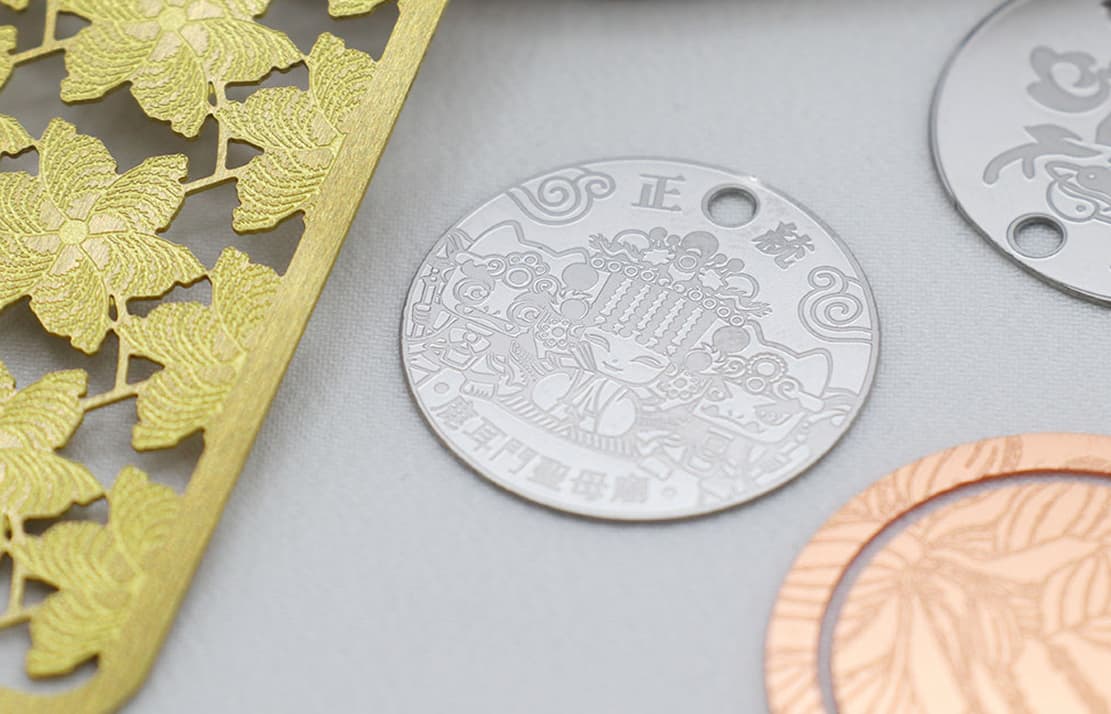
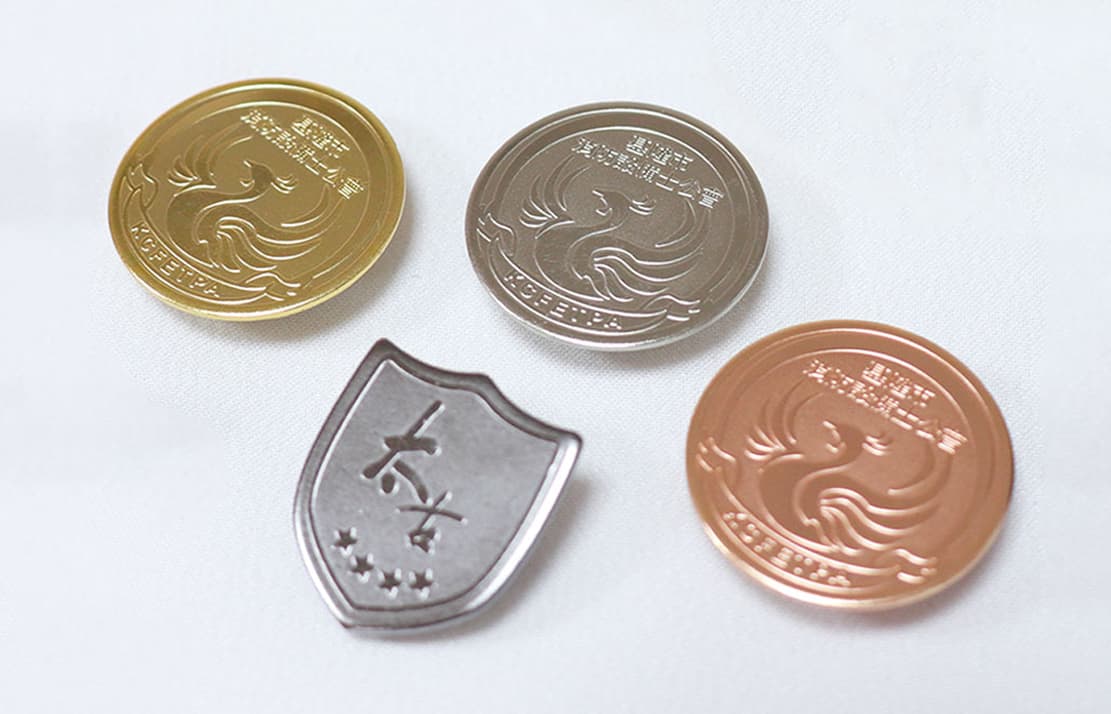
Etching is a process that uses chemical solutions to corrode metal surfaces, creating detailed textures, grooves, and perforations. It is widely used for industrial parts, filters, badges, bookmarks, and other metal accessories, offering both aesthetic appeal and functional precision.
Why Choose Etching?
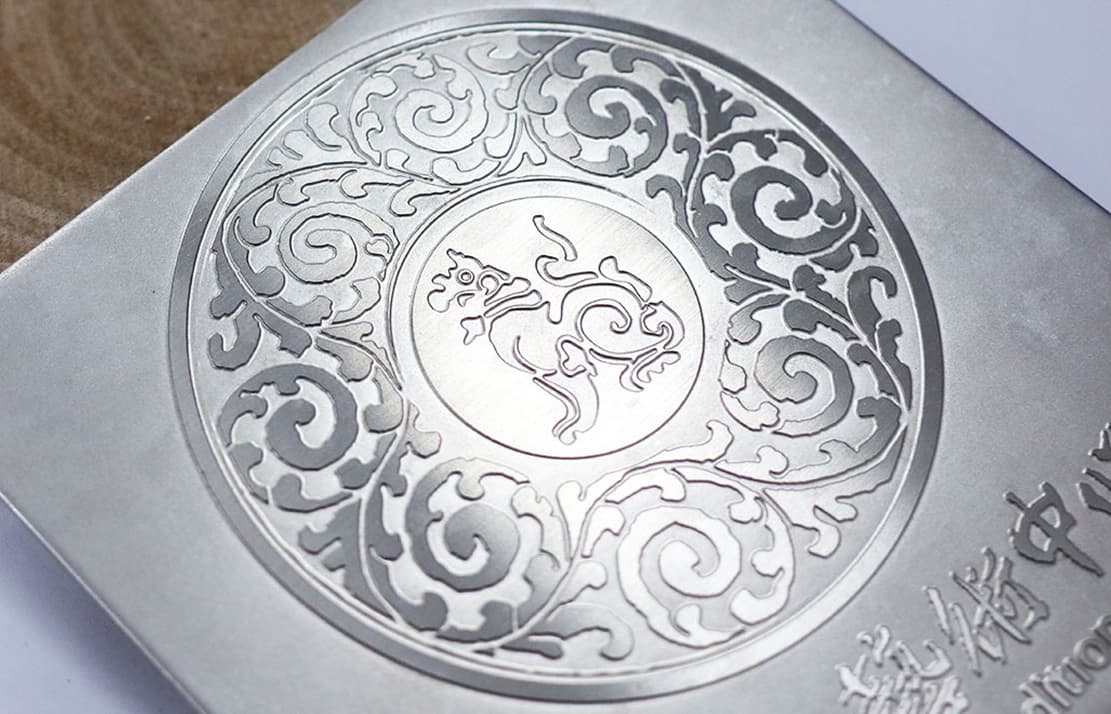
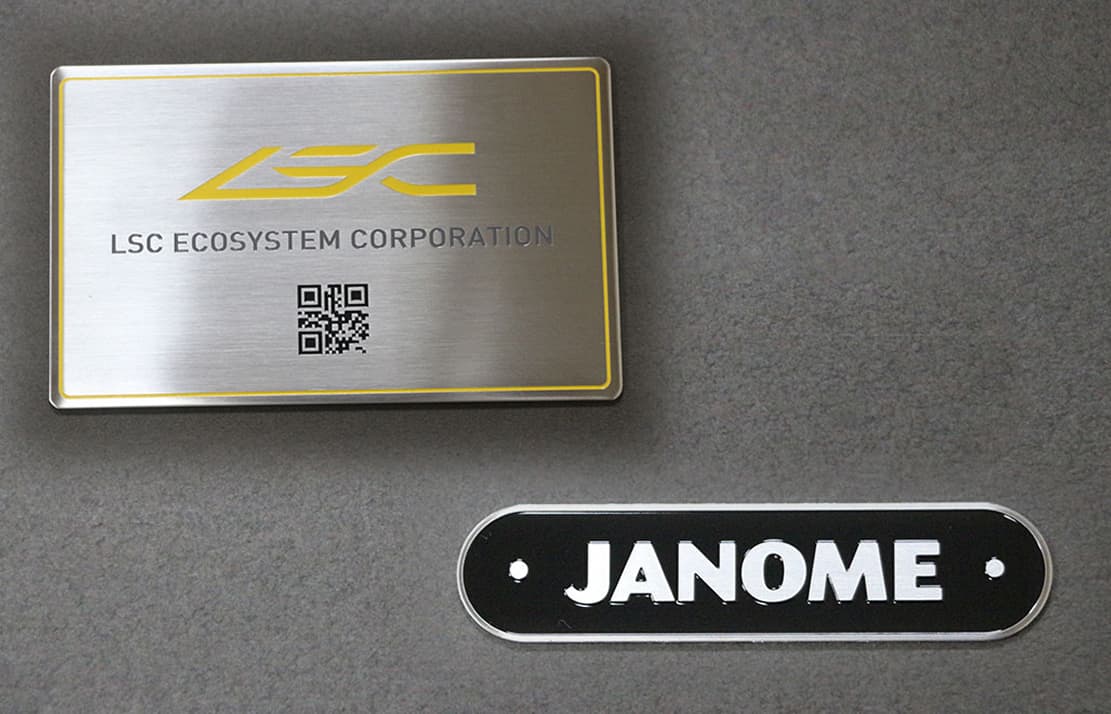
- Enhanced dimensionality: Unlike printing, etching produces raised and recessed lines, as well as partial cut-through effects for tactile depth.
- Cleaner results than laser engraving: Etched grooves are uniform without the burn marks associated with laser engraving.
- Flexible depth options: Etching can achieve very shallow (0.02 mm) to deep (0.5 mm) effects.
Note that deeper etches will make recessed lines wider and raised lines narrower, so the optimal depth is chosen based on design detail and technique.
Guidelines for Half‑etch Design
- Minimum recessed line:≥ 0.1 mm for reliable etching.
- Minimum raised line: ≥ 0.15 mm for clear visibility.
- Line width varies with etch depth; different depths require adjusted guidelines.
Shallow vs. Deep Etch (without coloring)
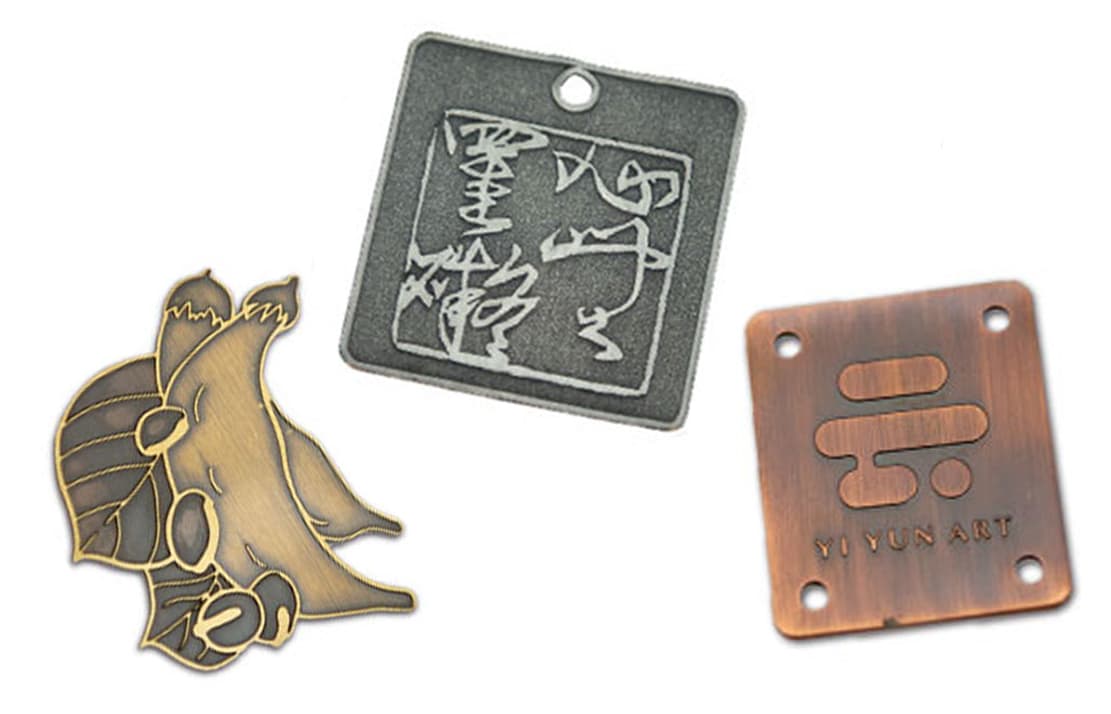
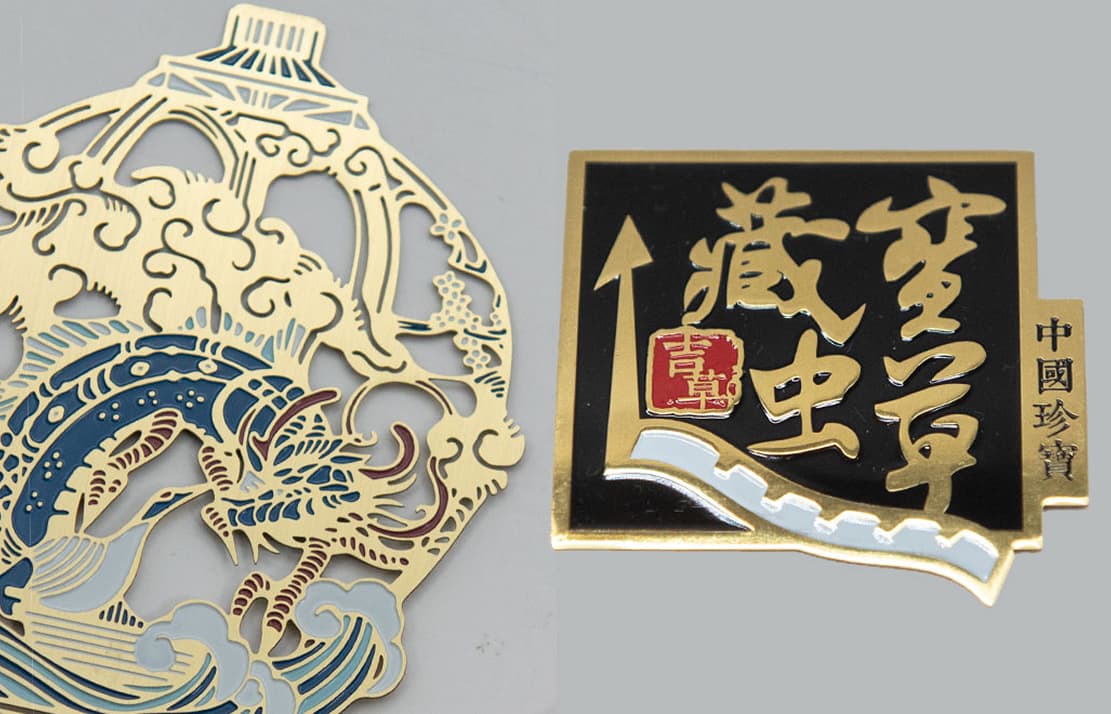
Shallow vs. Deep Etch (with coloring)
Font Design Tips
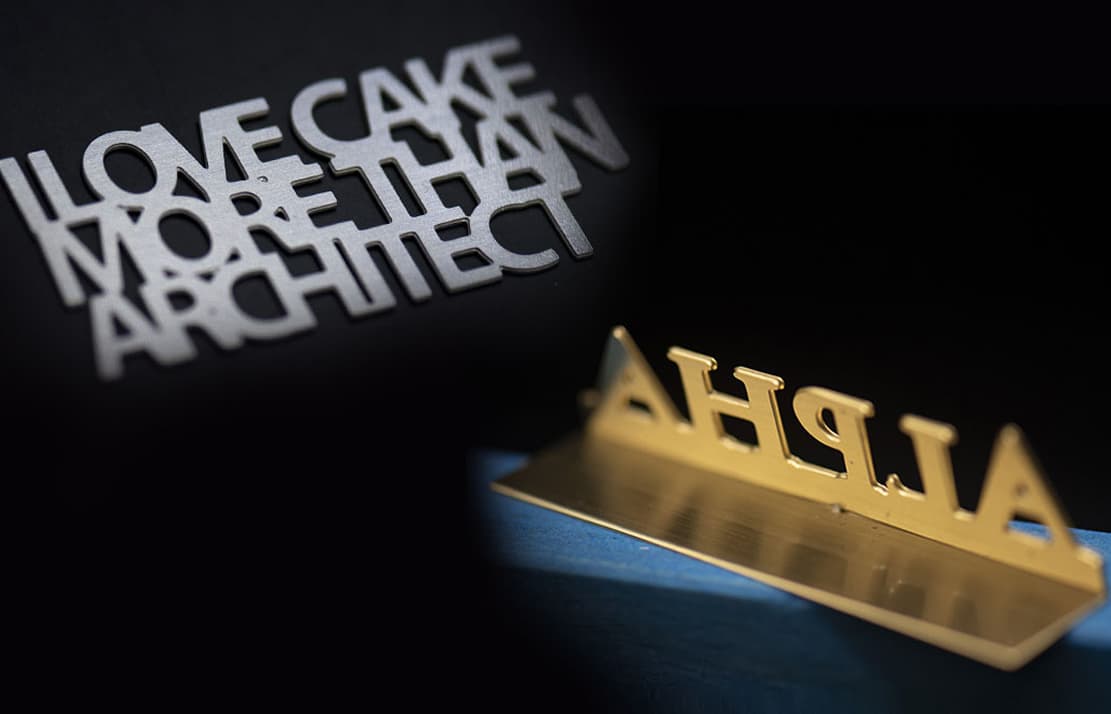
- For text height < 5 mm, use consistent line-width fonts (e.g., Microsoft JhengHei, Arial).
- Convert text to outlines to prevent font substitution during file transfer.
Cut-Out / Openwork Guidelines (by sheet thickness)
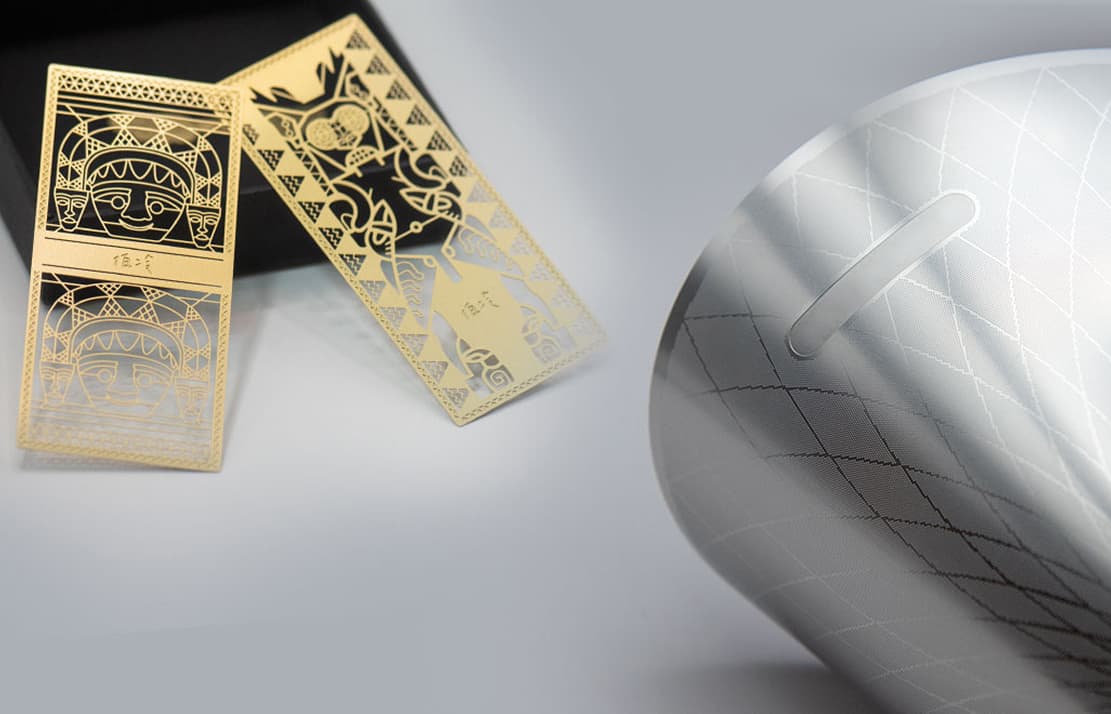
Etching can achieve through-cuts or perforations without the need for molds. The hole size and the frame width are closely related to the thickness of the metal sheet, as outlined below.
| Sheet Thickness | Cutout / Hole Requirement | Recommended Frame Width | Application |
|---|---|---|---|
| ≤ 0.5 mm | ≥ thickness + 0.2–0.3 mm | ≥ 0.2 mm | High-detail crafts or assembled products (industrial parts, small components) |
| > 0.5 mm | ≥ thickness + 0.2–0.3 mm | ≥ 0.4 mm | Visual designs with less strict size tolerance |
Note:
If frame width is too thin or cutout area too small for thick sheets, perforation may fail or cause deformation. Ensure proper proportions during design.
Key Design Takeaways
- Etch depth should be selected based on line width, coloring, and material; deeper is not always better.
- Multicolor etching requires metal raised edges to separate colors.
- Cutout areas must be ≥ sheet thickness + 0.2–0.3 mm, with frame strength sufficient to avoid breakage.
Final Note
Whether designing a unique metal bookmark, badge, keychain, or exploring new creative mediums, etching can elevate precision and visual appeal. From prototyping to production, our team provides practical guidance and process support to turn your ideas into physical pieces.
Curious if your design is suitable for etching? Send us your sketches or concepts for a free preliminary consultation and quote.